Showing posts with label United Kingdom. Show all posts

Saturday, February 27, 2010

Chile earthquake tsunami warnings

UPDATED

The 8.8 earthquake off Chile (by way of comparison, the 7.0 Haiti earthquake was five hundred times weaker) has caused tsunami warnings to be issued for countries on the other side of the Pacific.  According to Pacific Tsunami Warning Center
A TSUNAMI WARNING IS IN EFFECT FOR CHILE / PERU / ECUADOR / COLOMBIA / ANTARCTICA / PANAMA / COSTA RICA / NICARAGUA / PITCAIRN / HONDURAS / EL SALVADOR / GUATEMALA / FR. POLYNESIA / MEXICO / COOK ISLANDS / KIRIBATI / KERMADEC IS / NIUE / NEW ZEALAND / TONGA / AMERICAN SAMOA / SAMOA / JARVIS IS. / WALLIS-FUTUNA / TOKELAU / FIJI / AUSTRALIA / HAWAII / PALMYRA IS. / TUVALU / VANUATU / HOWLAND-BAKER / NEW CALEDONIA / JOHNSTON IS. / SOLOMON IS. / NAURU / MARSHALL IS. / MIDWAY IS. / KOSRAE / PAPUA NEW GUINEA / POHNPEI / WAKE IS. / CHUUK / RUSSIA / MARCUS IS. / INDONESIA / N. MARIANAS / GUAM / YAP / BELAU / JAPAN / PHILIPPINES / CHINESE TAIPEI
The PTWC warning for Hawaii is at the highest warning severity level.  In 1960 a 9.5 magnitude quake  -- the largest earthquake of the century -- off South Central Chile caused a tsunami that killed over sixty in Hawaii before it taking more than 100 lives in Japan.

Whether any tsunami will have a serious impact as far north as California, Oregon, Washington, British Columbia, and Alaska, will depend largely upon the ocean currents, according to a tsunami expert interviewed on CNN.

CNN's weatherman mentioned a report of a 45 meter-high-wave hitting Easter Island, but this astounding claim had not been validated.  The 1960 Chilean earthquake reportedly caused a 25 meter-high tsunami.

You can watch a live streaming video from Chile here.

Update 1:  The West Coast and Alaska Tsunami Warning Center has issued a "tsunami advisory" only for California and Alaska (map).  Vancouver, where the Olympics is finishing up, will apparently not be impacted.  WCATWC has also posted a  preliminary forecast model energy map:


Update 2: And here are the tsunami travel times (WCATWC):

Sunday, February 7, 2010

Sarah Palin sees "potential trouble in the future," seeks "divine intervention"

Many mainstream US media accounts of Sarah Palin's speech last night (NYT, WaPo, CNN) failed to report Palin's call for "divine intervention."  Only the Guardian, a British newspaper, quoted Palin's most outrageous statement in full.  Once again, the US media ignores facts necessary to telling the real story concerning Sarah Palin: the observation that millions of Americans -- including the mainstream media itself -- are bewitched by a veritable nutcase.

Responding to a question about what Congress's top priorities should be, Palin said:
"I think, kind of tougher to put our arms around, but allowing America’s spirit to rise again by not being afraid to kind of go back to some of our roots as a God fearing nation where we’re not afraid to say especially in times of potential trouble in the future here, where we’re not afraid to say, you know, we don’t have all the answers as fallible men and women so it would be wise of us to start seeking some divine intervention again in this country, so that we can be safe and secure and prosperous again. To have people involved in government who aren’t afraid to go that route, not so afraid of the political correctness that you know – they have to be afraid of what the media said about them if they were to proclaim their alliance to our creator."
....in times of potential trouble in the future here... In this context, it is worth keeping in mind Sarah Palin's association with the so-called Third Wave movement, described as "a post-denominational church to take the world for the end times."

Here's the clip:

Monday, January 25, 2010

Shaker Aamer among 50 slated for indefinite detention?

Marking the one year anniversary of Obama's executive order to close the detention facility at Guantanamo Bay, a Justice Task Force has recommended that 50 prisoners be held indefinitely without trial. Obama first spoke out in support of  a policy of "indefinite detention" on May 22, 2009.

Scott Horton, in his groundbreaking Harper's Magazine story about the cover-up of three murders at Gitmo, suggested that the US government's primary motive for holding certain prisoners indefinitely may have been to prevent these inmates from implicating US government officials in crimes.

Horton's comments about one prisoner in particular, a Saudi born British resident named Shaker Aamer, renders the recommendation of the Justice Task Force all the more unsettling.... Continued here.

Friday, January 15, 2010

The real devil in Haitian history

In the previous post I quoted Pat Robinson's crazy remark about Haiti, and the Haitian ambassador's smart response.    CB commented:
Well it doesn't matter what the Hatians did for America they still made a deal with the devil.
Actually, CB has a point.  It turns out there was a "devil" -- several devils in fact.   There was also a "deal."  In a post (h/t Joseph) that surveys two centuries of Haitian history, Violet unmasks the devils and the deal.

After 1791, when Haiti became the second independent nation in the Americas,
[US Treasury Secretary Alexander] Hamilton helped draft the Haitian constitution -- but . . .  [President Thomas] Jefferson reneged on Adams’s deal with [Haitian revolutionary leader] Toussaint L’Ouverture, cut off trade and contact, and offered Napoleon help in putting down the revolt. We can’t possibly have a black republic down in the Caribbean, he wrote. What will our slaves think? They might get ideas!

So Haiti was isolated: no diplomatic recognition, official embargoes on trade. “You don’t really exist,” said the French. And the Americans. And the British. And the Spanish. The economy foundered. Then the Bourbons started making noises about re-conquering the island. Finally, in 1825, the Haitians signed a deal with France: recognize us diplomatically, call off the gunboats, and in return we will reimburse you for the loss of us as your slaves. The price? One hundred and fifty million francs.

Haiti spent the next 122 years paying off that indemnity.  The final installment was in 1947. . . .
See the end of the next post for a recommendation about where to donate for Haitian earthquake relief.  See  here for a list of those who have live-blogged the disaster.

Thursday, January 14, 2010

Against the envy of less happier lands?

Rick B. informs us that Britain's Home Office called the decision "disappointing."    Pathetic might be a better word for it.   The decision:
Police stop and search powers under UK terrorism laws have been declared illegal by human rights judges after two Londoners questioned their legality. The right to question people without grounds for suspicion – granted by the Terrorism Act of 2000 – violates the Human Rights Convention, said the European Court of Human Rights.
The threat of terrorism is the British government's excuse for draconian search and siezure laws, yet London is far from being the only city in the EU that has been targeted by terrorists.

It's a sad development when you consider the long history of civil liberties on the island relative to the continent.  There ought to be something deeply humiliating for the British about this decision; the fact that they have been "given back" their freedoms by a European court.

But that's what things have come to.

Thursday, January 7, 2010

The 10 creepiest events of 2009

I don't know about you, but I thought 2009 was an especially creepy year.

It had been a creepy decade alright.    But our expectations had been raised to an extent that it seemed to have ended on an especially creepy note.   There was Obama, golfing though a terrorist incident.  It reminded people of how George W. Bush had responded to Hurricane Katrina.  Yet by 2005, few informed people had come to expect much in the way of leadership from President Bush.   By the time Obama had spoken out about Crotch-bomber, it was already evident that his "bold plan" was to ensure the country emulated the very kinds of security theater measures that had been hallmarks of the Bush era.  

The following list obviously excludes many disturbing events that happened in places like Burma, Iran, or Zimbabwe in 2009.    But "creepiness" is an attribute I associate with people, leaders, countries, and institutions that we have reason to expect to uphold certain standards.  There should be an element of astonishment about the behavior of the  actor.     Anyway, here it is:

Jotman's Top 10 Creepy Events of 2009
  1. Obama's decision to bail out failing banks with taxpayer money without according taxpayers temporary ownership of the banks; lack of effective new regulations concerning CDS.
  2. Time Magazine's decision to name as "Person of the Year" an economist who had failed to anticipate the housing bubble. It's but the latest example of how media companies help to legitimate a defective system that serves Wall Street at the expense of the public.
  3. Obama's recklessly small and brazenly uncreative stimulus package.
  4. The day it became clear that US health care reform would enrich pharmaceutical companies and bolster the fortunes of the insurance industry at taxpayer's expense
  5. Obama's declaration of support for extra-constitutional "preventative detention" powers (for himself).
  6. When Democrats began excusing Obama for advancing the very same policies they vehemently condemned when George Bush was president.
  7. When the same Republicans who had cheered Bush as he expanded the US deficit began claiming that a deep recession is a fine time for reducing government spending.
  8. China's decision to execute a mentally ill Englishman in the face of protests of the British government and various NGOs.
  9.  Thailand's recent deportation of over 2,000 Hmong refugees to Laos and reports that the Thai Navy tortured Rohingya refugees before towing them out to sea where it abandoned them.
  10. Discovering that the Bush Administration oversight of the EPA left Americans not only breathing toxic air but drinking poisonous water
After a year like that, what could possibly creep us out in 2010?    Just about nothing.  That's the bright side of the situation in which we have dug ourselves.

    Wednesday, November 18, 2009

    Airline travel: Will carbon offsets make a difference?

    The NY Times presents a sobering observation:
    A recent study in Britain concluded that one flight from London to Los Angeles produced more carbon dioxide per person than the average British commuter produces in a year by traveling by train, subway or car.
    The article goes on to explain how the theory behind carbon offsets seems to be flawed.
    In theory, the purchase of carbon offsets is supposed to cancel out the emissions generated by activities like flying or heating office buildings by directing money to programs that reduce emissions elsewhere, like tree-planting in Africa or a hydropower project in Brazil. An airline passenger might volunteer to pay $5 to $40 to offset his flight, with the price linked to distance.

    Offsets have played a growing role in the greening of travel because carbon dioxide emissions from airplanes are growing so quickly and there is currently no technological fix that would drastically lower them.
    Of course, there is an an obvious fix, an economic fix.  Simply tax the emissions.  Make it more expensive to fly.  Pollution ought to be priced into the cost of transportation (and everything else we buy).

    The article illustrates how difficult it has been for companies to find effective carbon offsets:
    EasyJet, which was founded in 1995 but has vastly expanded its fleet since 2003, also uses only the newest and most fuel-efficient jets, flies full planes and packs in extra rows of seats, making its estimated emissions per passenger 28 percent lower than more established carriers on the same routes. Some airlines are experimenting with innovations that may someday reduce emissions, like using fuels made with algae rather than crude oil.
    Of course, Easy Jet is flying more people who might otherwise not be flying at all.

    Usually a false choice is fed to the traveling public by a corporate media dependent on the airlines for advertising revenue.  You've heard it before:  the myth that the alternative to low cost air travel is to "stay home."  It's simply not true.  Or it need not be the alternative.

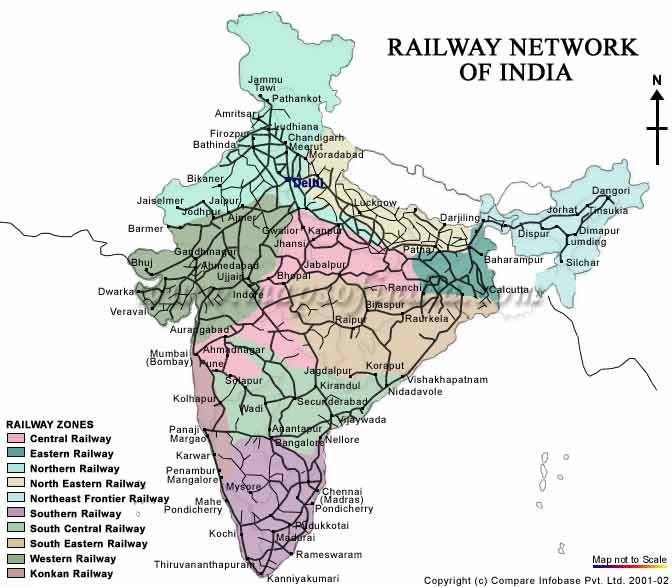
    A quick glance at Easy Jet's route map reveals that most -- if not all -- of its destinations are accessible by rail (or could be).   There is something outrageous about the fact that so many Europeans elect to fly to various places that are almost equally accessible by train.   Of course, they have an overwhelming financial incentive to make this choice because it is usually cheaper to fly.  If Easy Jet tickets did not cost so little, many more people would elect to travel by train (which causes fewer greenhouse emissions).

    Chinese and Indian entrepreneurs are busy applying this unsustainable business model to their own countries.  Coincidentally, just like Europe, both regions already have extensive rail networks. 

    I think it is ridiculous to imagine that airborne altruists are going to make much of a difference to the climate change problem.  I think it is wrong that airlines don't have to include the true cost of pollution in the price of the ticket, giving airlines an an unethical competitive advantage over passenger rail.

    Ecologically misaligned market incentives have squeezed people quite needlessly!

    Monday, September 28, 2009

    Will Obama lead on climate change?


    To get beyond yesterday's problems, the United States must take the lead by solving tomorrow's.

    The Pittsburgh G20 ended last week, and the Bangkok Climate conference has just begun. The make-or-break Copenhagen summit is only two months away. A climate policy expert looks at how much progress has been made, and finds American leadership falling short of what's necessary at this critical juncture (Media Release, Sept. 28):
    Oxfam International Senior Climate Policy Adviser Antonio Hill said recent announcements by British Prime Minister Gordon Brown and the EU on climate financing, and Japan and China’s stronger language last week on emissions reductions and finance, would put extra pressure on the US to step up and signal its intentions on its role in a global deal.

    “Despite good intentions and warm words over the past six months, the US didn’t deliver real leadership last week at the UN Climate Summit and G20.  Either the US lifts its game, or the next two weeks in Bangkok could go down as just a holding pattern before a fatal nosedive in Copenhagen,” he said.

    He said while many key countries, including China, India, Japan, African Union, the Least Developed Countries and the Alliance of Small Island States, had shown they were ready to enter the final, more detailed phase of negotiations, intransigence on the part of rich countries like the US, Canada and Australia was proving an obstacle to progress.

    Key sticking points remain the emissions reductions developed countries are willing to deliver – current commitments are around 15 per cent instead of the science-based 40 per cent reductions on 1990 levels by 2020 - and the amount of financing they will put on the table for developing countries to both adapt to the impacts of climate change and develop on a low carbon pathway.

    The two-week negotiations, held in South-East Asia, one of the world’s most vulnerable regions to climate change, is the penultimate negotiation session before Copenhagen in December, when a fair and safe global climate change treaty must be secured.

    Mr Hill said that whilst last week’s summits in the US were forums for world leaders to signal their intentions, the UN negotiating process continuing in Bangkok was the only place where countries could forge an agreement to avoid catastrophic climate change.

    “It’s crunch time,” Mr Hill said. “What is needed for a breakthrough is a clear commitment from developed countries – responsible for three-quarters of the carbon in the atmosphere - to commit to substantial finance, additional to existing aid levels, to developing countries.”
    Hill echoes what I heard  Jorma Ollila, chairman of Royal Dutch Shell, acknowledge in Helsinki three months ago:  the developed world bears responsibility for having damaged the earth's atmosphere, and Washington must take the lead.

    Health care, the war in Afghanistan, and climate change:  these three big issues confront the Obama presidency simultaneously.   Who does not believe that the success or failure of Obama's entire presidency rides with how competently the president handles one or another of these matters?

    But which decision will be the most significant? Of the three issues, two are largely yesterday's fights, only one concerns the challenge of the future.   Moreover, on two issues -- the same two -- the cost of waiting for a second chance is manageable.  Other countries have solved the problem of providing universal health care, and the US will have other opportunities to solve it.   The rest of the world has "given up" on the cause of bringing freedom to Afghanistan, but supposing Obama hesitates to defy his generals and sends in more troops, Congress can still bring them home at any time.  For the rest of the world, Afghanistan is yesterday's war; universal health care, a social policy worked out generations ago.  There will be second chances.

    But if the American economy -- and by extension, the world -- is not set on a path towards sustainable growth, then wars and health care costs are bound to spiral out of control.  Furthermore, the cost of setting the world on a sustainable path with respect to climate change increases with every lost decade.  And on this issue, alone, there is a "point of no return."   Therefore, hands down, if the Obama Administration must get just one issue dealt with properly in 2009, it's energy and the environment.  To get beyond yesterday's problems, the United States must take the lead by solving tomorrow's.
     ____
    Photo by Jotman shows the US Congress.

    Thursday, July 9, 2009

    How Alan Johnston survived kidnapping

    People endure extraordinary things. First thing: you worry might lose your mind. But you have more strength than you might imagine in a crisis. You shouldn't despair.

    - Alan Johnston at the IPI World Congress in Helsinki

    Jotman live-blogged the International Press Institute World Congress in Helsinki. One of the panel discussions concerned "How to interview terrorists and survive kidnapping." Three journalists talked about how they survived getting kidnapped by a terror group. They shared their advice for other journalists who might find themselves in similar circumstances.

    One of those journalists was Alan Johnston (BBC bio, Wiki, Amazon) who is a correspondent for the BBC World Service. Here are Jotman's jots of Alan Johnston's responses to some questions:
    Question: Hopefully it won't happen to anyone in this room. But do you have any advice for other journalists, should they get captured?

    Alan Johnston: I had a radio. I heard Terry Waite interviewed. Terry Waite said to remember "mind and body are extraordinaire things and you will find more strength than you might have expected." Ingrid Betancourt endured a much longer time in captivity. So of course did Primo Levi. People endure extraordinary things. First thing: you worry might lose your mind. But you have more strength than you might imagine in a crisis. You shouldn't despair.

    Question from an Indian journalist: Did captivity change your understanding about the group. Did you wonder if Stockholm Syndrome would impact you? Did it?

    Alan Johnston: Having been there -- in Gaza -- for 3 years prior to capture, I absolutely condemned what was happening. I will say I was lucky I wasn't tortured. I am lucky I wasn't subjected to anything like Abu Ghraib. I will always be grateful for that. While I was in captivity, listening to the radio they gave me, I heard on the BBC a report about a British soldier (Cpl Donald Payne) who was found to have tortured an Iraqi receptionist (Baha Mousa). That sounded far worse than anything that was happening to me.

    Nigerian asks question: Do you think your kidnappers did not know what they wanted?

    Alan Johnston: Clearly they wanted prisoners released. But the mad politics of Gaza swung in my favor: Hamas won control of Gaza over Fata. So Hamas wasn't going to have a small jihad group operating on its turf. So they took over the situation. Events turned in my favor.
    Jotman's entire live-blog of the panel discussion includes commentary by Peter Bergen who is a print and television journalist, author, and terrorism analyst for CNN; Giuliana Sgrena, a journalist with Il Manifesto; and moderator Hamid Mir who is executive editor of Geo TV, Islamabad.

    Thursday, July 2, 2009

    Thailand: 8 foreign correspondents accused of lese majeste

    The entire board of the Foreign Correspondent's Club of Thailand (FCCT) has been accused of lèse majesté ("injured majesty") -- the crime of causing injury to the majesty of the king. According to The Nation, a harsh critic of deposed Prime Minister Thaksin filed a complaint against the board Tuesday. The case? Apparently the club had approved the sale of a DVD that contained a controversial speech.*

    Who is on the FCCT board?
    The board, includes three British nationals including the BBC's Bangkok correspondent Jonathan Head, three American nationals, including two working for Bloomberg and the Wall Street Journal, an Australian national and a Thai news reader for Channel 3, Karuna Buakamsri.
    Basically, saying or doing just about anything could get you charged with lèse majesté in Thailand. A young Thai man was charged with the crime because he didn't stand up in a movie theater. A British journalist faces lese majeste charges because of the position of a photograph on the BBC News website. An Australian writer spent months in jail for writing a paragraph in a novel that only a dozen people must have read. A renowned Thai scholar is now in self-imposed exile for having written a book critical of the rich. A Swiss drunkard got convicted of the crime for doodling on a poster. And the list goes on.**

    At times the story reads like a
    Monty Python script.

    But for the accused and their families, Thais, and foreigners in Thailand, the law is no joke. You just have to cross a well-connected Thai person the wrong way and he or she can go to a police station demand that charges be filed. Unfortunately, the maximum penalty for lèse majesté is fifteen years in a filthy Thai jail cell.

    Crazy stuff like this happens somewhere else, doesn't it? As I blogged in June, Thailand shares several things in common with Iran.

    ____
    * "the board's decision to sell DVD copies of Jakrapob Penkair's controversial speech at the club back in 2007 constituted an act of lèse majesté." As Bangkok Pundit notes "a lese majeste complaint has already been filed against Jakrapob for what he said that night."

    Tuesday, June 16, 2009

    How to interview terrorists and survive kidnapping

    Jotman's live-blogging of the International Press Institute World Congress in Helsinki continues...

    A truly extraordinary panel.

    Three panelists -- Alan Johnston of the UK (pictured left), Giuliana Sgrena of Italy, and moderator Hamid Mir of Pakistan -- have survived kidnapping by terrorist organizations.

    Two members of the panel -- Peter Bergen and Hamid Mir -- have interviewed Bin Laden. CNN analyst and author Peter Bergen -- who conducted the first TV interview with Bin Landen -- has written a biography of the man. Hamid Mir is the only person aside from Robert Fisk to have interviewed Bin Laden on three occasions and Mir was the last person to have interviewed Bin Laden (the interview took place in Kabul in Nov. 2001).

    Two somewhat distinct themes emerged in the discussions. The first concerned how to survive captivity and how to avoid getting kidnapped in the first place -- whether through improved training or otherwise building greater journalist know-how. The second theme corresponded to the description of the panel session, set out in the conference agenda as follows: "Should journalists, who provide the public with the information they need to understand the complexities of the battle against terrorism, talk with terrorists? Do they do so at the risk of becoming pawns in the terrorists’ public relations campaigns? Where should journalists draw the line?"

    Here's a list of the panelists:
    • Peter Bergen, Print and Television Journalist; Author; Terrorism Analyst, CNN (Wiki, Amazon)
    • Alan Johnston, Correspondent, BBC World Service (BBC bio, Wiki, Amazon)
    • Giuliana Sgrena, Journalist, Il Manifesto, Rome (Wiki)
    • Hamid Mir (Moderator), Executive Editor, Geo TV, Islamabad (Wiki)
    Hamid Mir: Margaret Thatcher said, "Media is the oxygen for terrorism." Agree?

    Peter Bergen: Yes, but publicity is oxygen for most things in life. We can't self-censor though. I believe the public has the intelligence to decide what is an appropriate tactic and what is not. So yes, terrorism gets coverage.

    In the aftermath of 9/11 in the Muslim world demonstrations were not huge. Pro 9/11 demonstrators numbered just 30 thousand in Islamabad and another 30 thousand in Jakarta. Contrast these figures with anti Iraq-war demonstrations which were much larger -- hundreds of thousands demonstrated if not millions demonstrated (in these cities and elsewhere throughout the Muslim war in protest of the American invasion).

    Hamid Mir: Your experiences as a captive?

    Alan Johnston: Pleased to be here in Helsinki. I want to say thank you to IPI for their support while I was captive. In Gaza I spent time with the Army of Islam. Some good things came out: I suppose I got to learn more about myself in captivity. And I got to talk to people with an extremist or jihadi mindset. I spent time with men in the lower ranks; those people guarding me. Straightforward men. Men lost in their religion. Men who had failed, really, to understanding the best qualities of Islam: the compassion, kindness toward strangers, etc., that one encounters throughout the Muslim world. One of my guards only communicated in sign language, assuming that to talk to me might actually pollute him.

    The leader of group was interesting. The first night of my kidnapping I was locked in this room when I heard a key turning in the door. A large figure in white robe appeared. It was as if he was looking to inspect what they had just caught. He began to ask questions of me. He asked me my religion. I said "Christian." Then he asked me if I am "a crusader like George Bush." Just as some in the West seem to regard all Arabs as terrorists, some Arabs regard all Westerner as Crusaders.

    Giuliana Sgrena: In Italy we had discussions about the Red Brigade. We discussed about whether it is useful to publicize the documents they would feed to the media. The Italian media came to no consensus on this question.

    We can give the information away, exert a certain control over the timing of a publication. Do we follow timing of the terrorist? We can postpone the transmission of a video so we don't follow the agenda of the terrorist. We can make choices about timing.

    My kidnappers taped 2 videos. Some 400,000 demonstrated for my release. I didn't know what happened outside when I was kidnapped. My kidnappers told me of the photos all around the country -- about all the protesters supporting me. Football team players played a match wearing the word "Giuliana" on their jerseys. This impressed the kidnappers, who, fortunately, were supporters of Rome.

    Hamid Mir: Giuliana and Alan had been rescued through negotiation. On the other hand, I was rescued when my building -- I was locked up in the basement -- got bombed and my guards were killed!

    Bergen: (Commenting on the recent Bin Landen tape shown by Al Jazeera). These days, most terrorists groups release their tapes on the Internet. There are no intermediaries. It is quite unusual for Bin Laden to release an Al Quaeda tape to Al Jazeera.

    Bin Laden talked about 1 million refugees coming out of Pakistan's Swat. Now there are 2.5 million refugees. So coincidental, or tape was held until newsworthy tape. No mention of Obama's trip to Cairo.

    Is Al Jazeera a tool of Bin Laden? No. Their audience is smart. Also Al Jazeera makes news judgements. News judgements are not moral judgements, they are about news. News is not a moral category.

    As for journalists, if we had information about an imminent attack, we would certainly tell the authorities.

    [Jotman Comment: When I spoke to Peter Bergen afterwards he told me he has no reason to think Bin Laden is not still alive. He also believes the recent Bin Laden message is genuine. "Al Jazeera is no more likely to be fooled by a fake Bin Laden tape than CNN is to be fooled by a fake Obama tape," he said.]

    Alan Johnston (photo): BBC used its publicity card in my case. They had no better options. But in other cases, you would not want to go this route. Sometimes there should be no publicity.

    Audience member from Slovenia: When I was working for BBC in Northern Ireland in the 1970's, there were no instructions, my wife was just informed of the extra insurance policy!

    Hamid Mir: There is a lack of proper training of journalists for covering wars in South Asia. But I am aware that CNN and BBC have such courses.

    Alan Johnston: I had done BBC kidnapping training. I suppose it was about as helpful as any course could be. I must say it is hard to recreate the feeling of actually being kidnapped though! Unfortunately, many journalists get no such training.

    Question: Should the media or government negotiate with terrorists?

    Hamid Mir: This is job of governments in my opinion.

    Giuliana Sgrena: I think that a human being more important than a lot of principles, so I think a government needs to do a lot of things to bring about the release of a captive. So I appreciate it very much if my government paid for my release. Other governments pay secretly or pay in other ways. Though they do not admit it -- officially.

    Question: Hopefully it won't happen to anyone in this room. But do you have any advice for other journalists, should they get captured?

    Alan Johnston: I had a radio. I heard Terry Waite interviewed, Terry Waite said to remember "mind and body are extraordinary things and you will find more strength than you might have expected." Ingrid Betancourt endured a much longer time in captivity. So of course did Primo Levi. People endure extraordinary things. First thing: you worry might lose your mind. But you have more strength than you might imagine in a crisis. You shouldn't despair.
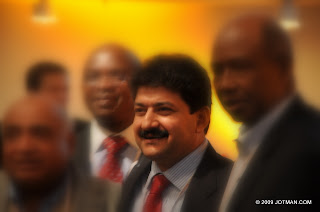
    Hamid Mir (photo): First, research and study the area. Don't be embedded with army or militants. This way you become a target. Hire a local translator/guide. Always be friendly with the locals who are the real victims of the problem. They provide you the true information. By contrast, the army or militants provide you with propaganda.

    Punjabi journalist in the audience: Never lose your mental balance!

    Question from Russia Today: Is kidnapping on the increase? How to counter the trend?

    Hamid Mir: In Pakistan the media is being seen as the enemy. Because they think the media is against them.

    Giuliana Sgrena: Don't embed yourself with the military.

    Question from an Indian: Did captivity change your understanding about the group. Did you wonder if Stockholm Syndrome would impact you? Did it?

    Alan Johnston: Having been there -- in Gaza -- for 3 years prior to capture, I absolutely condemned what was happening. I will say I was lucky I wasn't tortured. I am lucky I wasn't subjected to anything like Abu Ghraib. I will always be grateful for that. While I was in captivity, listening to the radio they gave me, I heard on the BBC a report about a British soldier (Cpl Donald Payne) who was found to have tortured an Iraqi receptionist (Baha Mousa). That sounded far worse than anything that was happening to me.

    Nigerian asks question: Do you think your kidnappers did not know what they wanted?

    Alan Johnston: Clearly they wanted prisoners released. But the mad politics of Gaza swung in my favor: Hamas won control of Gaza over Fata. So Hamas wasn't going to have a small jihad group operating on its turf. So they took over the situation. Events turned in my favor.

    Peter Bergen: One way organizations -- terror organizations -- make money is through kidnapping.

    Getting now to the subject of talking to terrorists... We did the first TV interview with Bin Laden. First time he spoke to Western audience. He declared war on US on CNN. In 1997. Prior to embassy bombings. It was useful for the public to know who this person was. Why he was at war with us.

    But because Bush always said Bin Laden had attacked us because of "our freedoms" -- rather than our policy -- many Americans don't know the reason Bin Laden attacked us. Our interview was useful as warning and as an explanation.

    Hamid Mir and others have put pointed questions to the terrorists. In an interview, you confront the terrorists.

    Hamid Mir: I interviewed Bin Laden 3 times. I was not sure I would ever get back to my office safely. When you are confronting a big terrorist you must not become his tool. Ask tough questions. Encounter him. So if you are arrested, you can present your questions as evidence that you exposed him or proved him wrong. Conscience, professional ethics, need to be kept in mind. Examine how Bergen interacted with the terrorist. Or look at Jessica Stern -- she wrote a book (Talking with Terrorists) on the psychology of terrorism. Stern interviewed dozens of terrorists, wrote a good book. Don't become their tool. Serve society, not serve terrorism. [Jotman: here is an interview of Jessica Stern]

    Peter Bergen (Explaining what got him interested in Bin Laden). Following the World Trade Center attack of 1993 I went to Afghanistan to look into that question. The first mention of Bin Laden came in 1996 in a book by Judith Miller. It struck me that these guys spoke English; how disciplined they were. I spent a lot of time preparing questions. I had to submit questions in advance. As it turned out, the questions Bin Laden would not answer were mostly personal: family and money. He answered the important ones (Jotman photo: Bergen).

    Question: What is terrorism?

    Giuliana Sgrena: (When civilians are used as means to an ends).

    Question: Why do you think the Taliban are not terrorists?

    Giuliana Sgrena: Dangerous ideology but can't put them all together. To say that Taliban = Pushtu = terrorist. That's not helpful.

    Alan Johnston: Know the realities on the ground. Come up with a line of questioning that holds up to the light the arguments being made by both sides.

    Hamid Mir: Generally, the Pakistani media are just concerned about avoiding civilian casualties.

    Question from a Member of Parliament, India: The terrorists feel they are right. The focus of the media is not on the root causes.

    Hamid Mir: Why is the media in the habit of bracketing terrorism with Islam?

    Peter Bergen: Non-state actors that kill civilians are terrorists. That's an agreement we can come to. The killing at the abortion clinic was not described as "Christian terrorism" in the US media. I would point to the large number of those killed by the Islamic terrorist groups -- mostly targeting Muslims. It's something to do with Islam. It's a description of the fact that the people doing these activities believing they are doing it in the name of God. They say they are doing it to defend Islam.

    Alan Johnston: In Gaza I tried to explain this and that. Mostly to explain what people are doing, and what they say they are doing something.

    Peter Bergen: Terrorists have media strategies. These strategies have little to do with anyone in the room. They have a propaganda outfit. People in the room are being bypassed by direct online publication (by the terrorist groups themselves).

    Question: We don't even know who is a civilian. Are settlers in Palestine civilians?

    Question: How did you manage to meet Bin Laden three times when the whole world is looking for him?

    Hamid Mir: Various intelligence services have interrogated me. The US ambassador to Islamabad said "you are safe only because we have a record of your hard questions." I was the only journalist left in Kabul. After my interview, the Taliban left the city. I got introduced (to Bin Laden) out of the madness (chaos). By the way, Robert Fisk has also interviewed Bin Laden three times.

    Question: Maybe you should train the CIA since you can find him and they can't!

    Hamid Mir: That's not our job to train them, it's their job to learn from us.

    Jotman live-blogged the following panel discussions at the IPI World Congress:

    Tuesday, June 9, 2009

    Is the Nordic model worth emulating?

    At the G20 summit in London I watched Gordon Brown announce that “the Washington Consensus is over.” Indeed, the financial crisis had left the so-called Anglo-Saxon model of economic growth completely discredited -- a fact that even a British Prime Minister could no longer deny.

    So the old model was out. But what might serve as an alternative? Going into the summit France and Germany hardly inspired confidence. Neither did the safety-net deprived, export-driven model of growth adopted by Asian countries such as China, represented at the meeting seem to hold the answer.

    Largely absent from the G20 summit of April 2 were a group of countries that have been wildly successful by almost any measure -- countries that may well offer a model worth emulating. Now, as never before, the example of Sweden, Finland, Norway, Denmark (and to this list might be added the Netherlands) deserve a careful look.

    But is it possible for other countries to emulate the example of the Nordic democracies?

    At the IPI Congress in Helsinki, Monday, a panel of experts on Scandinavia addressed the question.

    I live-blogged their answers.

    At the IPI Congress in Helsinki, Monday, a panel of experts on Scandinavia addressed the question.

    The first panelist to speak, Andrew Brown, the author of Fishing in Utopia, was skeptical.

    “Democracy not one thing, not a set of constitutional arrangements, but almost religious faith in the people, and social attitudes” Brown said. “If you take these away, you are merely left with the constitutional arrangements.”

    Andrew saw much of what had made Nordic democracy viable absent in his native England. “Swedes will complain to radio call in shows about how the country is not doing enough to nurture badgers” Andrew observed. For Andrew, the essence of Nordic democracy is something cultural -- you simply can’t export an attitude of caring for badgers!

    Andrew’s critique stood in marked contrast to the optimism of the two panel economists concerning the transferability of Nordic model. Here’s a list of the panel members as presented in the agenda:


    “Nordic Democracy – A Lesson for the World?”


    The so-called Nordic Model, with its emphasis on consensual political institutions, social welfare, and the universal provision of basic human rights, has long been admired by other countries. But critics point at the increased state interference in all areas of public life. Has the right balance been achieved? Is the Nordic model of democracy exportable? What challenges does globalisation present to the model?

    • Andrew Brown, Writer and Journalist, The Guardian, London
    • Sixten Korkman, Managing Director of ETLA (The Research Institute of the Finnish Economy) and EVA (Finnish Business and Policy Forum)
    • Pär Nuder, former Minister of Finance, Stockholm
    • Egill Helgason, Moderator, Presenter, "Silfur Egils", Icelandic National Broadcasting Service (RUV), Reykjavik

    Drawing on a US political analogy, Sixten Korkman, Managing Director of ETLA, explained that that in the Nordic countries social welfare had not come at the expense of their ability to compete in the global marketplace. In other words, these countries showed that what’s good for society can be good for companies.

    Taking the current US debate over health care reform, Korkman said, “You can have collective solutions that are also good for business -- argument for publicly funded health care (as opposed to employer financed as in the US).”

    I thought this was a good example. One explanation for the bankruptcy of GM is that the company had been weighed down by having to foot the bill for employee healthcare -- money that could have been invested in making the cars of the future.

    Korkman listed three points that seem to characterize Nordic Democracy.

    • Spending more on education
    • Social security
    • Keeping people working

    He added, “You can typically find a Nordic ‘cluster’ (in statistical analysis). This suggests it’s real. You can talk about these countries as a distinct group.”

    The main point? “The Nordic countries,” Korkman said, “represent a more liberal economic systems than everyone in Europe except Anglo-Saxon countries.”

    “But is the model successful?” Korkman asked. “Yes, generally speaking, it is. Take one key variable: Social mobility. Inter-generational mobility higher than in France, UK, and the USA.”

    Pär Nuder, former Minister of Finance, Stockholm, supported much of what Korkman had said.

    “(Relative to most OECD countries) we have higher employment, lower inflation, stronger public finances.” And he asked “Why?”

    Answering his own question, Nuder said, "is it that Nordic countries have lowest taxes? No, they don't. A small public sector? No, they have a large public sector." So what explains it?

    Nuder told us he would explain it in several points:

    • Open economies. Free traders in his genes. Free trade key since “back when”. No other countries -- except perhaps Netherlands -- have so many well-known international brands. Part of Nordic culture to be free traders.
    • Social democratic system. I believe in strong public finances. Much fight deficits and high inflation.
    • Human capital investment. Invest in people through education and R&D. We know we have to compete with more R&D.
    • Inclusive workforce. Natural conclusion. If you want a sustainable society, must mobilize whole work force, including women. Highest female participation in the labor force. World’s most generous parental leave. One percent of GDP (spent on childcare) delivers highest female participation in labor.
    • Green ethic. Back in the early 90s we introduced a CO2 tax. We lowered tax on labor, raised it on emissions.
    • Cooperation. Eternal conflict between work and capital. We are too small, we concluded to have labor conflicts. Our countries are very vulnerable to lack of peace on labor market, so we need organized, responsible, labor unions. We have social bridges for people to walk on. These social bridges mean that more people willing to accept the often painful adjustments of global market capitalism. You can have world's highest taxes if they promote not only equality and safety, but high growth. These could be adopted by other countries.


    I had not known about point number five. To think these guys had a CO2 tax back in the early 90s! Brilliant.

    “Our model is to ‘Protect people not jobs.’ This way we can pursue free trade. The way of providing subsidies to companies is decidedly not part of the Nordic solution.”

    The panel took questions from the audience.

    Question: How Nordics got out of the financial crisis of the early 90s?

    Egill Helgason replied: “The early 90s were bad for the world, but not as bad as now. You could export your way out. We all expected the market economy and welfare state. Even though we cut down everything, we didn’t cut education or R&D. We increased human capital investment.”

    Question: Why did peasant societies transform? An ideology?
    Andrew Brown said “It seems to me Scandinavia is small community surrounded by hostile wilderness. So you have to have cooperation and doing the best for yourself (culture hostile to freeloaders).”

    Other speakers agree with Andrew, raising these additional points: Finland part of Swedish Kingdom. Lutheranism. Long roots of national democracy. But Finland took longer to realize that reforming capitalism, not overthrowing it, is the way to go.


    Question: If it’s so great living up there, why the high suicide rate? Or is that a myth?


    Panelists agreed that overall, it’s a myth that suicide rates are higher in Scandinavia. One noted that “in Finland, suicide rate high, but not linked to labor welfare.”

    There was a back and forth about immigration. One panelist noted that it “isn’t fair to compare Canada’s success with Scandinavia’s failure. Canada’s immigrants are economic migrants -- highly educated, etc. But Scandinavia has mainly accepted refugees.”

    Jotman live-blogged the following panel discussions at the IPI World Congress:

    Friday, May 22, 2009

    A legitimate legal framework for prolonged detention?

    Obama's speech on "Protecting Our Security and Our Values" today at the National Archives Museum can be read two ways. On the positive -- "hopeful" -- side, most notably you had this passage:
    I have opposed the creation of such a Commission because I believe that our existing democratic institutions are strong enough to deliver accountability. The Congress can review abuses of our values, and there are ongoing inquiries by the Congress into matters like enhanced interrogation techniques. The Department of Justice and our courts can work through and punish any violations of our laws.
    On the other hand, you have various lines that ought to be of concern to anyone who does believe in separation of powers; the principle that no US political leader may act in place of judge and jury. I'm only quoting passages of Obama's speech that I found disconcerting (my own commentary in red):
    For the first time since 2002, we are providing the necessary resources and strategic direction to take the fight to the extremists who attacked us on 9/11 in Afghanistan and Pakistan. The same extremists?

    Now let me be clear: we are indeed at war with al Qaeda and its affiliates. We do need to update our institutions to deal with this threat. I thought Bush tried that already.

    And that is why I took several steps upon taking office to better protect the American people First, I banned the use of so-called enhanced interrogation techniques by the United States of America. Note: torture was already illegal before Obama banned it.

    In short, they [enhanced interrogation techniques] did not advance our war and counter-terrorism efforts - they undermined them, and that is why I ended them once and for all. Because torture clearly didn't serve our purposes.

    Let me begin by disposing of one argument as plainly as I can: we are not going to release anyone if it would endanger our national security, nor will we release detainees within the United States who endanger the American people. Where demanded by justice and national security, we will seek to transfer some detainees to the same type of facilities in which we hold all manner of dangerous and violent criminals within our borders - highly secure prisons that ensure the public safety. The phrase "justice and national security" suggests that justice alone won't suffice. The implication is that criteria other than justice will determine whether someone stays locked-up. Is that in the Constitution?

    . . . .we are treating these cases with the care and attention that the law requires and our security demands. Going forward, these cases will fall into five distinct categories. Obama took an oath to uphold the law of the land, not to do whatever -- in his opinion -- security demands. American law is not something you balance against security. Rather, security is something that happens within the framework of the law.

    The second category of cases involves detainees who violate the laws of war and are best tried through Military Commissions. They allow for the protection of sensitive sources and methods of intelligence-gathering; for the safety and security of participants; and for the presentation of evidence gathered from the battlefield that cannot be effectively presented in federal Courts. How do you know whether someone has "violated the laws of war" until he has had a fair trial? Federal Courts routinely have heard cases dealing with sensitive information over the years. Why the Commissions? (By the way, will members of the prior US administration who "violated the laws of war" also go before Military Commissions? Surely even people charged with war crimes have the right to be tried in proper courts.)

    Finally, there remains the question of detainees at Guantanamo who cannot be prosecuted yet who pose a clear danger to the American people. I want to be honest: this is the toughest issue we will face. We are going to exhaust every avenue that we have to prosecute those at Guantanamo who pose a danger to our country. But even when this process is complete, there may be a number of people who cannot be prosecuted for past crimes, but who nonetheless pose a threat to the security of the United States. Examples of that threat include people who have received extensive explosives training at al Qaeda training camps, commanded Taliban troops in battle, expressed their allegiance to Osama bin Laden, or otherwise made it clear that they want to kill Americans. These are people who, in effect, remain at war with the United States. As I said, I am not going to release individuals who endanger the American people. Decisions about who can or cannot be released are decisions made by judges, not by a political leader! Who does the president think he is? At least one of Obama's examples is really strange: having "commanded Taliban troops in battle" in 2001 can surely be no grounds whatsoever for depriving anyone of justice in 2009.

    . . . .I want to be very clear that our goal is to construct a legitimate legal framework for Guantanamo detainees - not to avoid one. In our constitutional system, prolonged detention should not be the decision of any one man. If and when we [who is we?] determine that the United States must hold individuals to keep them from carrying out an act of war, we will do so within a system that involves judicial and congressional oversight. Surely this kind of decision is for the courts alone to make, not merely oversee.

    However, it was my judgment - informed by my national security team - that releasing these photos would inflame anti-American opinion, and allow our enemies to paint U.S. troops with a broad, damning and inaccurate brush, endangering them in theaters of war. Lame.

    We see that, above all, in how the recent debate has been obscured by two opposite and absolutist ends. On one side of the spectrum, there are those who make little allowance for the unique challenges posed by terrorism, and who would almost never put national security over transparency. On the other end of the spectrum, there are those who embrace a view that can be summarized in two words: "anything goes." Historically speaking, is terrorism such a unique challenge?

    Both sides may be sincere in their views, but neither side is right. The American people are not absolutist, and they don't elect us to impose a rigid ideology on our problems. They know that we need not sacrifice our security for our values, nor sacrifice our values for our security, so long as we approach difficult questions with honesty, and care, and a dose of common sense. "We need not sacrifice our security for our values!" Was that not the rallying cry of American Revolution? I'm being sarcastic. America was founded by people who decided to put their values before the security afforded by the might of the British Empire.

    Right now, in distant training camps and in crowded cities, there are people plotting to take American lives. That will be the case a year from now, five years from now, and - in all probability - ten years from now. Neither I nor anyone else can standing here today can say that there will not be another terrorist attack that takes American lives. Yada yada yada.
    Obama's remarks today deserve a strong response -- perhaps something like this.

    Saturday, April 4, 2009

    From superpower to star power at the G20


    "I'm in love!" said a British reporter at the end of Obama's presentation. Yes, it was a lot like love.

    It had been President Obama's debut at a major global summit. American and British negotiators had obviously not achieved what they had sought in terms of stimulus spending from Germany and France. The superpower may have been willing to lead, but even close American allies in the G20 were not about to sign up to any new American-led initiative -- at least not just yet.

    One slightly enigmatic phrase by Gordon Brown -- unthinkable less than a decade ago -- seemed to have pegged what was on everyone's mind.

    "The old Washington Consensus is over. . . " proclaimed the prime minister of America's closest overseas ally.

    Gordon Brown no doubt meant "big C" consensus, but -- judging by questions later asked of other world leaders -- it might just as easily have implied consensus with a "small c." This summit seemed to mark the end, not of any specific Washington agreement, but the entire postwar era in which American leadership went unquestioned. It was as if the most harsh unspoken truth had just been shouted aloud from the friendliest foreign shore.

    Yet the Americans had one card up their sleeves that every other G20 nation -- save for a brilliantly orchestrated performance by Gordon Brown -- sorely lacked. And it only took two words to ignite the fuse.

    "Hello everybody!" said Obama.

    One blogger told me that on hearing those two words everyone in the room was awestruck.

    "Collectively we all gasped," the blogger told me.

    While Obama was making his way onto the stage in Press Room 1, I was stuck in Press Room 5 waiting for the president of India to finish answering a question about Pakistan. That's the moment when applause followed by Obama's voice boomed through the curtain walls.

    The quiet spoken President Singh was no match for star power. What kept those two dozen Indian journalists bolted to their seats? Couresy? National pride? I will never know, but five questions later -- as Singh scanned the room for another lucky reporter -- I made a break for the door, dodging laptop bags and crossed-legs.

    Holding my camera, I crawled onto the carpet at the foot of the stage where Obama was now answering questions.

    The expressions on the faces of journalists pleading to be picked by Obama caught my eye. The global news media representatives -- with whom I had spent the whole day -- suddenly resembled kids at a rock concert.


    In the past hour, I been in the presence of the leaders of Canada, Australia, Italy, and France. But this was something else. It certainly had little to do with the stage or the packed auditorium. It was the relaxed figure at the front of the room. Natural. Joking with us. Even the secret service guy who I shared the carpet with seemed at ease in this environment. By contrast, Stephen Harper's press conference had been a staring contest with two grouchy Canadian Mounties; Sarkozy's session resembled a rugby scrum; Kevin Rudd's felt like a contract-law seminar; Silvio Berlusconi's seemed to be some kind of seance.

    But Obama was one of us!

    Even having to hear the simpleton questions of several American journalists failed to break the spell. Members of the US press seemed to be asking the kinds of questions you would ask if you no idea about the specific issues that had been on the table at the summit. It's as if some American reporters believe journalism means asking questions as simple-minded as you presume your viewing audience to be.

    But Americans are smarter than their media. The proof was staring us in the face.

    All photos by Jotman.

    Monday, February 9, 2009

    Giles Ji Ungpakorn flees Thailand, issues Red Siam Manifesto

    A Jotman reader* has forwarded a provocative statement issued by Giles Ji Ungpakorn (it is written in both English and Thai). After reading the document, the first question that popped into mind was the whereabouts of its author.

    A story that appeared in the Guardian today answers my question:
    A leading Bangkok-based professor who has joint British and Thai nationality fled Thailand at the weekend in the face of a lengthy sentence under the country's draconian lese-majesty laws, which forbid criticism of the king.

    He is the latest person to face prosecution under the laws, seen as an attempt by the government to stifle dissent.

    Giles Ji Ungpakorn, 54, arrived in England at the weekend after being charged under the laws. He had been due to present himself to the police in Bangkok today and could have faced 15 years in jail if found guilty.

    "I did not believe I would receive a fair trial," said Ungpakorn, an associate professor of political science at Chulalongkom University and a contributor to the New Statesman and Asian Sentinel."

    "It is clear that the charge is really about preventing any discussion about the relationship between the military junta and the monarchy," Ungpakorn said. "This is in order to protect the military's sole claim to legitimacy: that it acted in the interests of the monarchy."
    So much for the location of the statement's author. He is safe. As for the document? It is entitled: The "Red Siam" Manifesto. Below I have tried to give readers a general idea of the topics the manifesto covers. If you are interested in the specifics, in time it ought to be possible to Google for the document.

    Giles opposition to military rule is longstanding. According to a Wikipedia article, Giles was the organizer of the first democracy protest following the 2006 military coup. (I was there, on the streets of Bangkok, live-blogging both the 2006 coup and the Giles-organized democracy protest -- see my posts from Sept. 2006). Giles' present statement, however, takes the Thai scholar's activism to another level. This statement strikes me as both newsworthy and of historic significance. I am aware of no other such statement, personally signed by such a high profile Thai figure, having been issued in recent years.

    The manifesto begins by contrasting the current Thai government -- installed following a controversial high court decision -- to the Obama Administration, which has made economic recovery a priority. By contrast, Giles believes the Thai government has prioritized cracking down on the opposition through the draconian les majeste law (under which Giles has been charged). Giles further notes that the government has created a website where Thais can inform on one another.

    The next part of the manifesto makes charges against the ruling monarchist-militarist elite, criticizing it for upholding what Giles holds to be an anti-democratic "monarchist" ideology. This accusation is followed by five specific charges against HM the King of Thailand (all but the most recent of these accusations relate to events discussed in a banned book by Paul Handley). This list concludes on a note critical of both the ruling monarch and the heir-apparent to the Thai throne.

    Giles does not think that Thais should resort to violence to change the system. The renowned Thai scholar maintains that Thais cannot wait for former PM Thaksin or the opposition Pua Thai Party to rescue the nation. Giles asserts that a new political party should be established to bring about reform. Giles cites the need for "secret," bottom-up organizing tactics in order to build a movement invulnerable to the arrest of any of its top leaders.

    Although Giles Ji Ungpakorn is an avowed Marxist, Giles declares that the new Thai political party he is calling for need not subscribe to any such ideology. Nevertheless, Giles outlines what he -- as one "red shirt" citizen -- thinks the new party should stand for.** Giles' own policy preferences encompass nine themes: 1) promoting freedom of expression and political association; 2) equality; 3) the establishment of a "welfare state" that levies taxes on the rich; 4) either the return to true constitutional monarchy -- or preferably in Giles' view -- the establishment of Thailand as a republic; 5) cutting off some of the purse strings of the military; 6) a new justice system, including trial by jury; 7) citizen management of local institutions; 8) environmentally sustainable modernization; 9) peace-promoting foreign relations.

    It will be interesting to see whether Giles' desire to see the energy of the "red shirts" movement transformed into a new political party will succeed. Also worth watching is the extent to which the overtly anti-monarchical turn in Giles' own public pronouncements will be reflected in any future political movement. Given the age and extreme popularity of HM the King, some commentators have viewed some revival of republican sentiment as practically inevitable over time. Nevertheless, it is clear that an attempt to use the country's harsh lese majeste law to squelch academic freedom has hastened the public radicalization of at least one prominent figure in Thai society.

    Please be aware that comments are moderated, and -- in keeping with Jotman's policy -- any comment critical of the Thai monarchy will be rejected.
    ___
    *Hat-tip to Jotman reader David.
    **Red-shirts are worn by opponents of the current Thai government who have taken to the streets in demonstration. As far as I know -- the choice of color (red) was not selected explicitly to symbolize socialism. Nevertheless, many members of this movement applaud former populist Thai leader Thaksin for initiatives that would appear to have advanced the social welfare of the rural poor.

    Thursday, February 5, 2009

    Rohingya victims of Thai Navy saved

    The Guardian reports on the discovery offshore Ache Indonesia of another boatload of Rohingyans cast adrift at sea:

    "Fishermen found a wooden boat without an engine drifting in the sea with 198 Myanmar [Burmese] migrants," said the Indonesian navy officer Tedi Sutardi. "They said the Thai authorities towed them out to sea and set them adrift.


    "Their boat was small. It's only 12m [40ft] long and 3m wide. It had almost come apart and was held together with ropes. They were standing in the boat for 21 days because there was no space to sit. It's a miracle they survived."

    According to Sutardi, the survivors recounted beatings by the Thai security forces after their arrest for illegal entry.

    Are there more victims at sea that Thailand has not told anyone about? Search parties may need to be sent out. The international community should demand that Thailand provide a full account of how many boatloads of Rohingya refugee migrants have been set adrift.

    This week the Economist suggested that joint US-Thai military exercises -- the annual Cobra Gold war games-- be called off on the grounds that Thailand has not shown sufficient regard for human rights over the past year. The newsweekly also cited the recent string of lese majeste charges (the outrageous Thai law´s most recent victims include a British journalist, a Thai scholar, and an Australian writer). The magazine explained that calling off the war games would impact the Thai military -- the organization most directly implicated in the abuse and killing of the Rohingyan refugees.

    H-tip J-P

    Thursday, November 27, 2008

    Terror attacks in Bombay (Mumbai)

    It's 04:15 in Bangkok, 02:45 in Mumbai, 16:15 in NY City.

    CNN reports: "Gunmen have targeted seven locations in south Mumbai, including two luxury hotels. A local government official says at least 78 people have been killed. One police official said his force was still engaged in a gunfight at the hotels. Hostages are being held, police told CNN-IBN."

    But Tweeter, not CNN is leading the coverage. First some blog reports coming in from Mumbai:
    • MB blog reports that "Reports are coming in that a lot of American and British tourists are being held hostage at the Oberoi Hotel. Other reports point to similar situation at the Taj Hotel."
    • MB also reports, "Hostages are lobbing grenades out of the windows at both the Taj and Oberoi as reported by bystanders."

    List of targets from the Times of India (via MB):

    The attack locations so far are

    Location Type of Attack
    Leopold Cafe, Colaba Shooting
    Hotel Taj Intercontinental Shooting and explosions
    Hotel Trident (Oberoi) Shooting and explosions
    Chhatrapati Shivaji Terminus Shooting
    Mazagaon Docks Explosion
    Vile Parle suburb, North Mumbai Explosion

    Twitter reports:

    There is lot of talk on the blogosphere about how useful Twitter has been in getting out reports.

    studioonedj: The #mumbai is a new level of citizens breaking news. Those watching the feed are watching history.

    vlkun: is amazed at how much more effective twitter and flickr are than CNN or the mainstream news about the attacks.

    dkris: RT @ahmaurya: RT @rotkapchen: HC! CNN Reporter just said, "We went to Twitter to see how this was unfolding" !!! #mumbai Twitter rocks
    Significant tweets:
    OK I'm signing off on this post now. It's now 03:15 in Mumbai and 16:45 in NY City.

    Update: there is a Wikipedia page for the attacks set up here.